

Aortic Diseases in Research
Aortic diseases and cardiovascular diseases pose a major health challenge. Aortic diseases, such as aneurysms or dissections, can lead to life-threatening complications if they are not detected and treated in a timely manner. Cardiovascular diseases include acute and chronic coronary heart disease, heart failure, and arrhythmias—four of the ten leading causes of death in Germany. Through advanced diagnostics, innovative treatment approaches, and preventive measures, we are working to minimize the risk and impact of these diseases and improve our patients’ quality of life.
Ongoing Projects
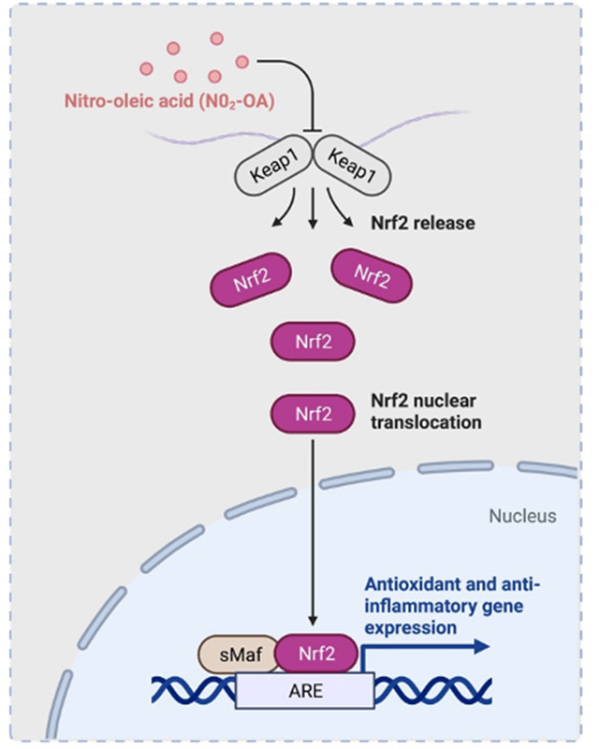
An abdominal aortic aneurysm (AAA) is a progressive disease in which stress factors cause cellular damage and an inflammatory response, leading to the breakdown of the extracellular matrix (ECM) and dilation of the vascular wall, ultimately resulting in aortic dissection and rupture. Histological evidence of atherosclerosis is a typical finding in AAA patients, but drug therapies are currently lacking.
In preclinical studies, nitro-fatty acids (NO2-FA), particularly nitro-oleic acids (NO2-FA or CXA-10), have demonstrated high efficacy in preventing maladaptive remodeling processes. These molecules act through post-translational modifications of cysteine and histidine residues and have successfully completed Phase I trials. Two Phase II trials were initiated as early as 2018.
NO2-FA influences the signal transduction of membrane-bound proteins and increases the activity of the transcription factor Nrf2. It inhibits factors relevant to AAA, such as ERK1/2 and NF-κB. In a mouse model of Marfan syndrome, NO2-FA reduced oxidative stress and vascular remodeling. Here, we are investigating the role of the anti-inflammatory mediator NO2-FA to identify therapeutically relevant treatment regimens and establish NO2-FA as a potential therapy for AAA.
Mollenhauer Lab - Cologne
An abdominal aortic aneurysm (AAA) is a progressive disease characterized by a severe inflammatory reaction in the vessel wall. Macrophages play a central role in this process; they not only release signaling molecules that attract additional immune cells and drive the inflammatory response but are also directly involved in the degradation of the extracellular matrix, thereby compromising the stability of the aorta. The thinning of the aortic structure can lead to a life-threatening aortic rupture. Previous studies have shown that inhibiting macrophage-driven inflammatory reactions prevents or slows the development of abdominal aortic aneurysms. However, it is important to note that broad therapeutic interventions in the immune system often come at a high cost and can increase the risk of fatal sepsis, i.e., a severe infection. Our goal is therefore to develop new diagnostic and therapeutic strategies to curb cardiovascular diseases that specifically modulate the immune system without compromising protection against cancer or infections. Recently, the expression of olfactory receptor 2 on vascular macrophages was discovered, which regulates their inflammatory potential. This receptor was originally identified on nerve cells in the olfactory bulb of the nose and is involved in mediating the sense of smell. Our group is currently investigating whether this receptor regulates the vascular macrophage response in abdominal and thoracic aortic aneurysms.
Winkels Lab – Cologne
Immune Cell Responses in Cardiovascular Diseases
Publications
Gage M. Stuttgen, Michael Chang, Jesse W. Williams, “When Smell Drives Swell: Olfr2 Fuels Inflammation in AAA,” Circulation Research, 138, 3, (e327969), (2026). /doi/10.1161/CIRCRESAHA.125.327969
Schelemei P, Wagner E, Picard FSR, Winkels H. Macrophage mediators and mechanisms in cardiovascular disease. The FASEB Journal. 2024; 38:e23424. doi:10.1096/fj.202302001R
Marco Orecchioni et al. Olfactory receptor 2 in vascular macrophages drives atherosclerosis through NLRP3-dependent IL-1 production. *Science*, 375, 214–221 (2022). doi:10.1126/science.abg3067
Marfan syndrome (MFS) is a common autosomal dominant connective tissue disorder caused by mutations in the fibrillin-1 gene (Fbn1). Affected individuals develop various organ dysfunctions, including ocular, skeletal, pulmonary, and dermatological manifestations, with thoracic aortic aneurysms (TAA) and aortic dissections being the most common causes of death. The Fbn1 mutation leads to increased levels of extracellularly bound transforming growth factor β (TGF-β), which activates proinflammatory and prooxidative signaling pathways in smooth muscle cells (SMCs) and destabilizes gene expression, thereby weakening the vascular wall. TGF-β also activates the innate and adaptive immune systems via MAP kinase signaling and phosphorylation of SMAD2/3. Innate immune responses play a crucial role in the progression of MFS.
Polymorphonuclear neutrophils (PMNs) are the main effector cells of the innate immune system and contain many tissue-degrading enzymes. Myeloperoxidase (MPO), a heme-containing protein found in neutrophil granules, is released upon PMN activation and affects the function of endothelial and smooth muscle cells (VSMC). MPO oxidizes nitric oxide (NO) in the subendothelial space, thereby impairing vascular integrity. MPO deposits lead to maladaptive remodeling of the endothelial glycocalyx and increased leukocyte recruitment. MPO also influences the phenotype of SMCs and activates matrix metalloproteinases (MMPs), which degrade elastin and collagen. In addition, MPO induces the transdifferentiation of fibroblasts into myofibroblasts by activating MAP kinase pathways, which further weakens the structural integrity of the vessel. In this project, we are investigating whether the activation of neutrophils and the release of MPO negatively affect vascular signaling and exacerbate aneurysm formation in MFS. This could represent an exciting target for future drug-based MFS therapy.
Mollenhauer Lab, Winkels Lab – Cologne
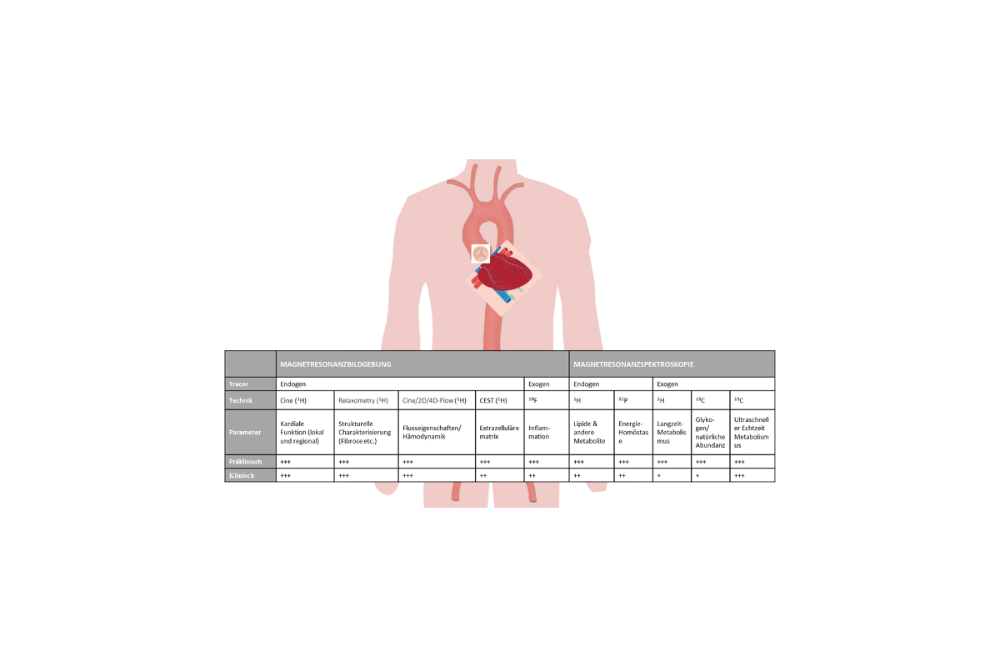
We have found that NO plays a crucial role in the regulation of coronary blood flow and, consequently, in myocardial function and metabolism [1–3]. In humans, we identified nitrite as a biomarker for eNOS activity in the endothelium and characterized the circulating NO pool at rest and during anemia, including its effects on LV function. In experimental and clinical models, endothelial-derived nitrite and NO bioactivity contribute to remote cardioprotection in myocardial infarction (MI). We were able to identify the importance of eNOS in erythrocytes and its cardioprotective role in myocardial infarction. We established small- and large-animal models of (non-)reperfused myocardial infarction (MI) to visualize inflammatory cascades and cells during MI reperfusion using cardiac MRI. In experimental and clinical models, we demonstrated that diabetes is associated with mitochondrial dysfunction of the heart, ectopic lipid deposition, increased susceptibility to myocardial ischemia, and impaired glucose transport across the erythrocyte membrane. In STEMI patients, altered glucose metabolism is associated with a decline in stroke volume and ejection fraction, increased end-diastolic volume, excessive left ventricular remodeling after MI, larger infarct sizes, and ultimately increased mortality.
- Nitric Oxide (NO) Signaling in the Endothelium and Erythrocytes
- Indices of the circulating NO pool (at rest and in anemia)
- Experimental and clinical research on acute myocardial infarction
- Assessment of myocardial function, structure, texture, inflammation, and metabolism in small- and large-animal models as well as clinical studies during myocardial ischemia in AMI, heart failure, and ICM using translational and clinical multiparametric CMR
- Impact of glucose metabolism on outcomes in AMI
Chennupati Lab, Gerdes Lab, Jung Lab, Kelm Lab – Düsseldorf
Cardiovascular Immune Biology - PI Gerdes - University Hospital Düsseldorf
Jung Research Group - University Hospital Düsseldorf
Kelm Research Group – University Hospital Düsseldorf
Publications
Solga I, Şahin A, Yogathasan V, Hofer L, Celik FG, El Rai A, Hosen MR, Wischmann P, Becher S, Polzin A, Gerdes N, Jung C, Kelm M, Chennupati R. Acute blood loss anemia aggravates endothelial dysfunction after acute myocardial infarction. Front Cardiovasc Med. Oct 13, 2025;12:1635293. doi: 10.3389/fcvm.2025.1635293. PMID: 41158731; PMCID: PMC12554764.
Jung C, Lang A, Duse DA, Bruno RR, Pöss J, Wolff G, Ceglarek U, Zeymer U, Fuernau G, Zweck E, Desch S, Freund A, Isermann B, Pfeiler S, Wernly B, Kelm M, Thiele H, Gerdes N. Plasma Proteome Analysis Identifies Vascular Endothelial Growth Factor Receptor 1 as a Prognostic Biomarker in Cardiogenic Shock. Circ Heart Fail. Dec 2025;18(12):e012890. doi: 10.1161/CIRCHEARTFAILURE.125.012890. Epub Oct 1, 2025. PMID: 41031405.
Yogathasan V, Wischmann P, Solga I, Jäger L, Becher S, Cortese-Krott MM, Gerdes N, Kelm M, Jung C, Chennupati R. Divergent roles of endothelial and red blood cell nitric oxide synthase in regulating cardiovascular function during anemia. Nitric Oxide. Dec 2025;159:1-10. doi: 10.1016/j.niox.2025.08.004. Epub Aug 25, 2025. PMID: 40865872.
Lang A, Oehler D, Benkhoff M, Reinders Y, Barcik M, Shahrjerdi K, Kaldirim M, Sickmann A, Dannenberg L, Polzin A, Pfeiler S, Kelm M, Grandoch M, Jung C, Gerdes N. Mitochondrial Creatine Kinase 2 (Ckmt2) as a Plasma-Based Biomarker for Evaluating Reperfusion Injury in Acute Myocardial Infarction. Biomedicines. Oct 16, 2024;12(10):2368. doi: 10.3390/biomedicines12102368. PMID: 39457679; PMCID: PMC11504053.
Quast C, Bönner F, Polzin A, Veulemans V, Chennupati R, Gyamfi Poku I, Pfeiler S, Kramser N, Nankinova M, Staub N, Zweck E, Jokiel J, Keyser F, Hoffe J, Witkowski S, Becker K, Leuders P, Zako S, Erkens R, Jung C, Flögel U, Wang T, Neidlin M, Steinseifer U, Niepmann ST, Zimmer S, Gerdes N, Cortese-Krott MM, Feelisch M, Zeus T, Kelm M. Aortic Valve Stenosis Causes Accumulation of Extracellular Hemoglobin and Systemic Endothelial Dysfunction. Circulation. September 17, 2024;150(12):952-965. doi: 10.1161/CIRCULATIONAHA.123.064747. Epub June 5, 2024. PMID: 38836358.
Wischmann P, Chennupati R, Solga I, Yogathasan V, Langerbein C, Jäger L, Gerdes N, Kelm M, Jung C. Red Blood Cell-Mediated Cardioprotection Is Impaired in Patients With ST-Segment Elevation Myocardial Infarction and Anemia. JACC Basic Transl Sci. Oct. 23, 2023;8(10):1392-1394. doi: 10.1016/j.jacbts.2023.06.010. PMID: 38094691; PMCID: PMC10714174.
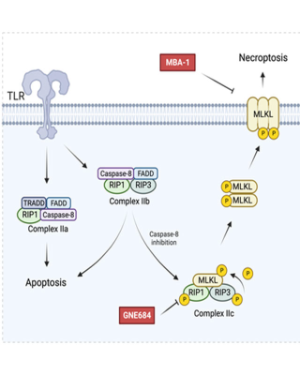
Cardiovascular diseases such as atherosclerosis, aortic aneurysms, as well as heart failure and arrhythmias (including atrial fibrillation and ventricular tachycardia) are associated with the activation of the immune system. Our research aims to gain a precise understanding of how immune cells influence signal transduction in blood vessels, remodeling processes in the heart muscle and heart valves, and the electrical stability of cardiomyocytes, with the goal of identifying novel pharmacological targets.
Another focus of our research is the investigation of inflammatory cell death mechanisms, particularly necroptosis, and their impact on cardiovascular diseases. For example, we have gained crucial insights into the central role of necroptosis in the development of aortic aneurysms. These discoveries are groundbreaking, as they open up new possibilities for therapeutic approaches. We are currently working intensively on the development of pharmacological compounds that specifically inhibit necroptosis. The goal of this research is to achieve a significant improvement in the treatment of aortic aneurysms and, potentially, other cardiovascular diseases. A promising candidate from this class of compounds is currently being tested in a large-animal study. This project represents a crucial step toward translating the findings into human clinical trials.
In addition, we are investigating mitral valve pathologies, focusing in particular on the role of inflammation, leukocyte activation, and cell death mechanisms in the development of mitral valve prolapse. Through a deeper understanding of how these immunological mechanisms contribute to valve disease, we hope to identify new targets for pharmacological therapeutic interventions, enabling us to offer patients a drug-based alternative in addition to traditional surgical and interventional treatment options.